
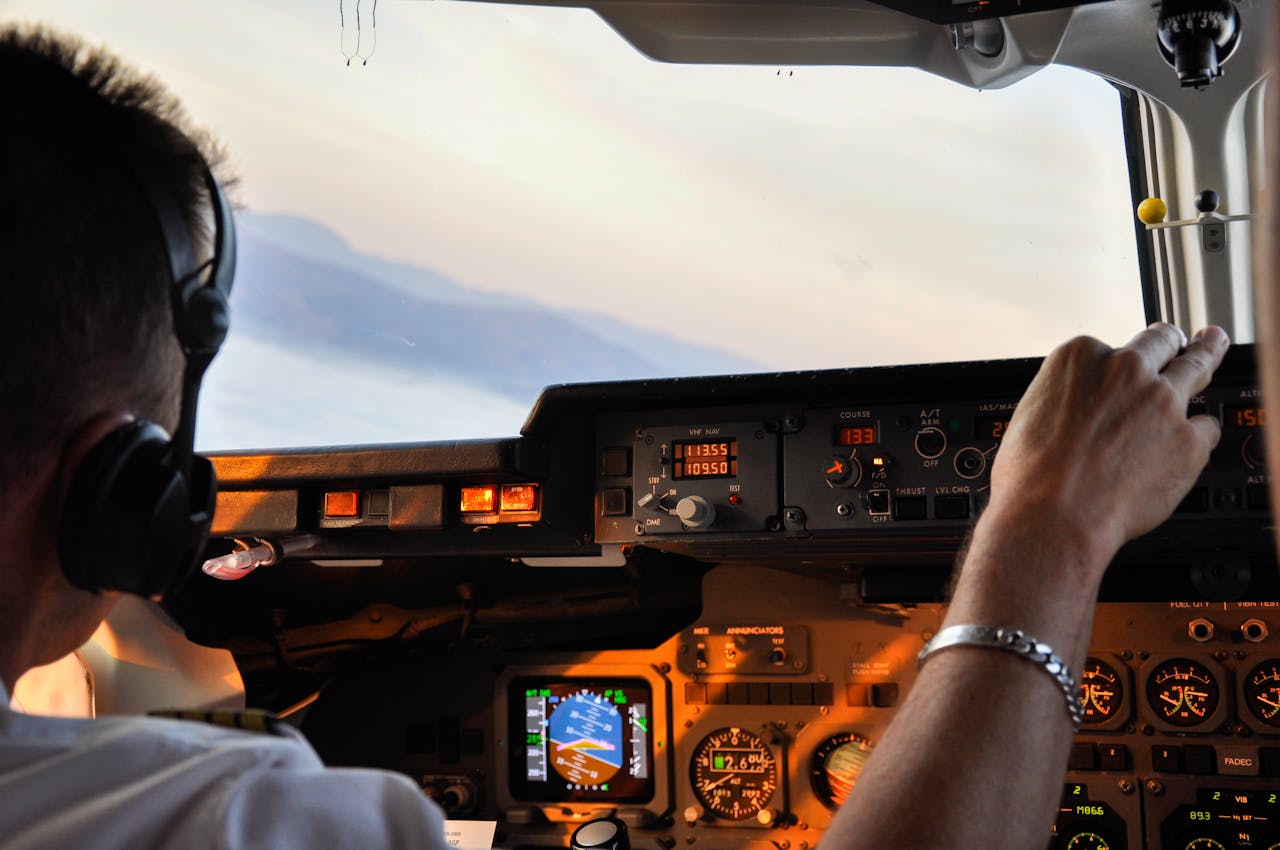
Flying multi-engine aircraft in South Florida aviation airspace means you’ve got to stay sharp. Around places like Pompano Beach, Class C airspace gets crowded quickly. You’ll hear jets on approach, trainers in the pattern, and sometimes more than one student talking to tower. It can feel like the whole sky is in motion. At Fly Legacy Aviation’s Florida campus, training takes place at Pompano Beach Airpark in Pompano, Florida, where a 5,000 foot runway and an operating control tower give students real-world experience in busy, controlled airspace.
That’s why staying ahead of distractions in a multi-engine plane matters. With more weight, more power, and more systems to monitor, small lapses can get big fast. Distractions don’t always show up waving a flag. Sometimes it’s a late readback or a missed traffic call because your attention was split. Below, we’re walking through the kinds of things that throw pilots off and how we help students fly through it with confidence.
Staying Focused in a Crowded Cockpit
In a multi-engine cockpit, there’s more to stay on top of than just flying straight. More power settings, more gauges, more noise. Add in ATC instructions, a checklist to run, and maybe an unexpected passenger comment, and it’s easy to lose focus.
We see it happen when pilots get buried in their instruments or try to fix a panel light while turning base. Eyes drop, attention fades, and now the approach isn’t lined up right. It only takes a second.
To cut down cockpit distraction, we work on organizing tasks by priority. That means first fly the aircraft, then work the radios, then handle the rest. We remind students to keep most of their attention outside the cockpit. Here are a few things that help keep things steady:
- Speak brief and clear when making calls to control or other aircraft
- Break up pre-landing tasks into sections done earlier in the pattern
- Try to hold a steady head position to maintain outside reference, even when switching frequencies
When the work is spread out and done ahead of time, there’s more room to think when the unexpected shows up.
ATC Distractions and How to Handle Them
Air traffic control keeps you in the flow, but for multi-engine students, it can feel like one more layer to manage. In Class C areas around South Florida, like near Pompano Beach, you may get rapid handoffs, speed changes, or heading assignments while already in motion.
Sometimes ATC instructions come fast, and we watch students want to rush back with a response before they’re sure what was said. That can lead to wrong readbacks or missed turns. Instead of getting drawn into every radio call, we work on building a small pause into the process.
When you get a new instruction, it’s okay to take one quick breath and then repeat it back clearly. This gives your brain the space to organize and double-check before responding. Knowing how to handle moments like this makes a difference.
Multi-engine planes need a little more planning to slow down or change course, so it’s important to process instructions accurately and early. Some helpful reminders we pass along include:
- Read back instructions after copying them all the way through
- Confirm anything that seems unclear right away
- Keep workload light inside the cockpit so your ear is free to listen
Staying calm on the radio helps keep the rest of the flight calm too.
Outside Distractions Unique to South Florida
One thing that makes flying around South Florida different is what’s outside the window. In areas like Pompano Beach, there’s more to see and more going on below than in quieter training zones. You’re flying over condos, highways, boats, and beaches. All of that can pull your attention away from what matters most.
Multi-engine students often find themselves glancing at housing developments or trying to find specific reporting points while managing a crowded traffic area. Add in a few helicopters or banner planes operating nearby and that becomes a lot to sort through.
To help stay ahead of what’s outside, we work on keeping a steady scan going. That means dividing attention in chunks between the horizon, other aircraft, and instruments without zeroing in on anything for too long. Being ready means not letting one thing, whether it’s a sightseeing chopper or a beachgoer’s drone, distract from the bigger picture.
Practicing over this kind of environment builds the ability to fly the aircraft first and manage visual noise second. Here’s how we stay focused in that mix:
- Stick with known altitude and heading standards so drift doesn’t sneak in
- Use simplified traffic callouts with landmarks rather than street-level detail
- Expect distractions but keep the priority on aircraft control and spacing
When you fly like you expect something to pop up on short final, you usually respond better when it does.
Training Your Brain to Stay Ahead
Good flying feels smooth, not because nothing goes wrong, but because you’re ready beforehand. Keeping your brain one step forward helps block distractions from piling up mid-flight.
One habit we build early is calling out patterns and checklists in our minds before the actual leg arrives. If we know we’ll be doing a touch-and-go with a left crosswind, we already picture throttle, flaps, gear, and rudder work before entering downwind. That way, we’re not thinking from scratch every lap.
Short, simple scan patterns help too. Instead of bouncing your eyes all over the panel, we teach pilots to stick to five-point scans across the most important areas. Combined with frequent outside glances, it keeps the big picture clear without missing system issues. In South Florida, Fly Legacy Aviation’s accelerated multi-engine program in the Diamond DA42 is structured as a focused one week course, so students spend several intensive days reinforcing these habits in real traffic and weather conditions.
Repetition, especially in the same aircraft and at the same field, trains your hands, eyes, and thoughts to move as one unit. That kind of flow leaves less room for outside noise to knock you off focus. We rely on a few basics to keep this working:
- Mental walkthroughs of each leg before entering the pattern
- Standard callouts, even in the cockpit alone, to lock in procedure timing
- Routine practice in various visibility and patterns so nothing feels new
With enough rounds in the pattern, your brain starts doing the work before you even realize it.
Smooth Skies Are Built on Good Habits
Staying sharp in busy airspace takes more than good instincts. It takes habits made by doing things the same safe way every time. From scanning traffic to keeping checklists short and timely, every little routine adds up to a quieter, steadier flight.
Flying multi-engine aircraft in South Florida gives students a real chance to grow fast, especially in complex Class C airspace. When they know what distractions are coming and how to work through them, their confidence rises with every lap around the pattern. It’s these habits that turn a busy airport into just another place to fly well.
Flying in multi-engine aircraft around Pompano Beach calls for focus and confidence in busy skies. At Fly Legacy Aviation, we prepare our students to anticipate challenges, manage distractions, and maintain control in every situation. When you want to develop your skills in real-world environments, our training programs support your journey with proven habits and expert guidance. Explore our approach to South Florida aviation training designed to help you succeed from day one. Contact us today to start your flight training experience.
