
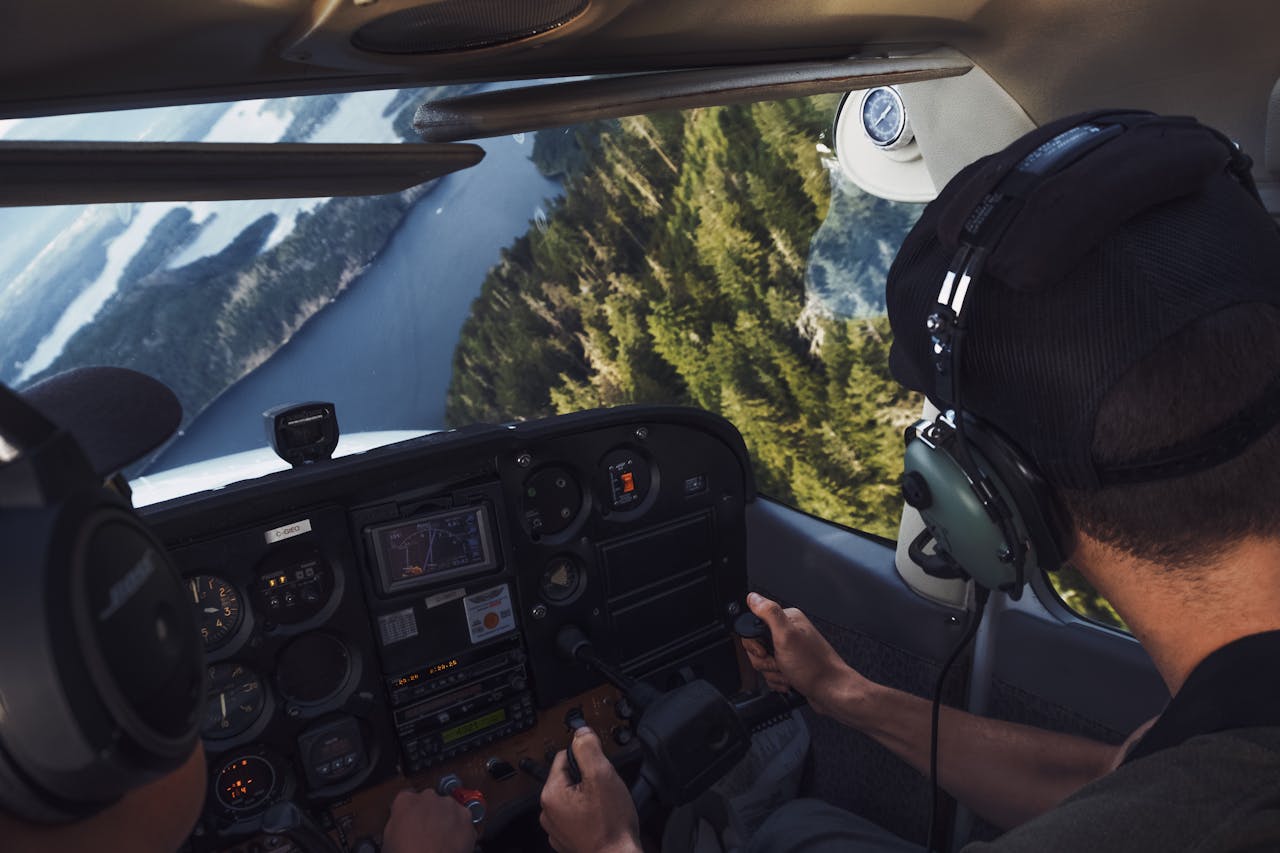
Flying over Florida has its perks. Clear skies, open coastlines, and year-round training weather draw students from all over. But even good weather can come with surprises. Down here in Pompano Beach, the warmth sticks around, and so does the humidity. That’s where things get tricky. At our Florida campus, we run a full range of courses from private pilot through twin-engine ratings and instrument instruction, so students see how these weather factors play out across different stages of training.
If you’ve started a flight training course in a multi-engine plane, you’ve probably learned the basics of your instruments. But in our local air, moisture doesn’t just fog up windshields, it can mess with the tools that keep the plane steady and safe. The pitot static system is one of those systems most of us take for granted, until something feels off. And when it does, small changes can turn into big distractions.
What the Pitot Static System Does
The pitot static system is behind instruments we depend on every flight. It handles the airspeed indicator, the altimeter, and the vertical speed indicator, the stuff that tells us how fast we’re going, how high we are, and what our climb or descent looks like.
In short, here’s how it works:
- The pitot tube reads dynamic pressure from the air hitting the plane. That pressure feeds into the airspeed indicator.
- Static ports sense outside air pressure without the force of motion. That data helps with altitude and vertical speed readings.
- Together, they let us know what’s happening when we’re climbing, descending, or cruising in the sky.
That matters even more in a twin. Multi-engine flying involves faster speeds, more complex weight shifts, and limited margin for error, especially when managing two powerplants. Reliable readings aren’t just a bonus, they’re part of every choice we make. A good flight training course goes over these systems. But when you’re learning here in Florida, the humid air adds extra layers to what you thought you already knew.
How Humid Air Affects Aircraft Instruments
Moisture has a quiet way of finding its way into places it doesn’t belong. That includes the pitot tube and static ports. When that happens, you’re not just dealing with fog or condensation outside the windows.
What we’ve seen is this:
- Even small amounts of trapped water can lead to frozen blockages at higher altitudes or cause false instrument readings at lower ones.
- You might see the airspeed indicator holding steady when it shouldn’t. Or the altimeter might show drift that doesn’t match the rest of your profile.
- These effects often show up fast, sometimes before you’ve left the pattern. All it takes is a few minutes of taxiing or quick temperature drops during climb.
We’ve noticed humidity becomes a bigger problem when aircraft sit overnight, especially after a late-day rain. Even performing the standard drain checks might not catch a light buildup in the wrong place.
Spotting the Signs of Trouble in the Sky
If your instruments start acting up just after takeoff or on the way to cruise, there are usually little signs ahead of time. Catching them early means you have more time to make decisions.
Here are some common alerts students experience mid-flight:
- The airspeed doesn’t move at all or jumps quickly during level flight.
- Altimeter readings don’t match outside visual cues or traffic pattern altitude.
- One gauge looks fine, while another shows numbers that don’t make sense.
In a multi-engine lesson, this can show up when one engine is throttled back. That’s already a high-focus moment. If the instruments add confusion, it can spiral fast. That’s why we practice keeping a calm head and using checklists, so even when things aren’t clear, you know what to do next.
When It’s Real, Not Just a Lesson
Sometimes it’s more than practice. Humidity-related failures don’t give a warning light or loud alert. They just appear when you need everything working.
That makes consistency the key. The more time spent checking, reviewing, and repeating these procedures during training, the faster students know something’s off. What feels like small habit work, scanning instruments every few seconds, comparing inside and outside data, lightly touching the throttle instead of overcorrecting, becomes steady, automatic behavior under pressure.
Twin-engine lessons usually bring more complexity by nature. So anytime we practice abnormal scenarios with partial panel or questionable readouts, it helps sink in the feeling of flying by what you know, not just what it looks like.
Flying Smart in Florida’s Winter Skies
Even in January, mornings can start damp down here. It’s part of what makes South Florida such a strong training ground, you face real conditions all year long. And even though winter here doesn’t mean snow or freezing temps, it still means fog, wet decks, and early dew that can collect overnight.
We make a point of checking everything a little more closely when we know humidity’s in the air. Before startup, we walk through every probe and sensor to be sure they’re dry and clean. During run-up, we double-check the readings to confirm nothing’s stuck or slow. If something feels even a little off, we pause and ask again whether it’s worth launching.
Flying well here means staying patient, even when the skies look clear. And sometimes, it means trusting your sense of something not being quite right, even if the system isn’t flatout failing. Our Florida flight school is approved to issue I-20 forms for the M-1 visa, which supports international students who want to train in this environment.
Keep Building Confidence with Every Flight
Instrument problems don’t always feel dramatic, but they can challenge focus fast. That’s why every lesson in multi-engine training is a chance to slow things down and fine-tune your reaction skills.
Humidity is just part of flying in Florida, but it doesn’t have to be a mystery. The more we pay attention during setup, the better our outcomes mid-flight. And the more we build strong habits now, the less likely we are to let moisture or mixed-up gauges cloud our good judgment later on. We fly smarter by flying familiar. That comes from practice, reflection, and the willingness to pay attention every time we turn the key.
Training in Florida’s unique weather can sharpen your flying skills when it matters most. With our emphasis on multi-engine practice, we know how dynamic local conditions challenge students to stay alert and build strong instincts. Lasting progress takes root with the right habits, and those develop quickly during a well-structured flight training course. At Fly Legacy Aviation, we help students stay ready for whatever the skies bring. Train with purpose and contact our team today.