
Readiness Checks Florida Students Overlook in Instrument Rating Training
Hidden Readiness Factors That Shape IFR Success
Instrument rating training in Florida is about much more than logging hours and passing a checkride. The rating is what lets you fly in the clouds with confidence, and that takes a different kind of preparation. The pilots who progress the fastest are usually not the ones with the most hours, but the ones who come in truly ready.
Florida adds its own twist. We have fast-changing coastal weather, busy airspace near big airports, pop-up storms, sea breezes, and plenty of traffic. All of that raises the bar for how prepared you need to be before you put on the hood or fly into the clouds.
Think of it as a personal preflight for your training. Before you start or step up your IFR work, you want to check your mental habits, your basic flying skills, your tech comfort, and even your schedule and lifestyle. At Fly Legacy Aviation, our experience training in both Philadelphia and South Florida has shown us the same pattern: students often overlook the same readiness checks, and those gaps slow them down.
In this article, we will walk through the often-ignored pieces of IFR readiness, from core skills and weather sense to mindset, avionics comfort, and planning your time so your training stays smooth and steady.
Foundational Skills You Must Lock in Before IFR
Instrument training should not be where you fix weak private pilot skills. If the basics are shaky, IFR lessons feel heavy and stressful.
You want your aeronautical knowledge to feel almost automatic. That means:
- Knowing your basic flight instruments and what they are telling you
- Understanding how your airplane flies and how the systems work
- Being clear on weather basics, NOTAMs, and performance charts
When that knowledge is solid, IFR lessons can focus on applying it to approaches, holds, and real decisions, instead of stopping to re-teach theory.
Hand-flying matters even more. Before you start serious instrument work, you should be able to:
- Hold altitude within tight limits without constant corrections
- Keep heading steady instead of “hunting” back and forth
- Set pitch and power, then trim so the airplane stays where you put it
Good trim habits are huge. If you are always fighting the yoke, your brain is busy with the wrong thing. IFR is about scan and planning. A well-trimmed airplane lets you keep your scan flowing, stay ahead of the flight, and handle procedures without chasing the instruments.
Radio work is another hidden gate. Many pilots are technically able to talk to ATC but still tense and slow. In busy Florida airspace, that tension eats up headspace you need for flying.
Before IFR training ramps up, check that you can:
- Use standard phraseology without thinking about every word
- Copy and read back clearances while still flying smoothly
- Change frequencies and handle handoffs without losing your scan
If you notice that talking to ATC makes you stare at one instrument or forget altitude, that is a sign you need more radio practice before deeper IFR lessons.
Weather and Workload Realities in Florida IFR
Florida weather is a great teacher, but only if you respect it. Late summer and the months around it often bring:
- Afternoon thunderstorms and quick convective buildups
- Embedded cells that can hide inside harmless-looking clouds
- Coastal fog and low layers that form and fade quickly
Instrument rating training in Florida is not just about learning to fly in a cloud layer. It is about learning when not to go, how to avoid storms, and how to make smart real-time changes.
To be ready, you should already be comfortable with basic weather products, such as:
- METARs and TAFs, not just reading them, but picturing the sky from them
- PIREPs and how they confirm or challenge the forecast
- Radar images and their limits, like delay and altitude issues
The key is learning to connect the dots. For a specific training block, can you look at the forecast, think about the time of day and local patterns, and make a reasonable guess about what the weather will do during that flight?
Now layer in Florida’s busy airspace. Training near Class B and C airports and along the coast means more traffic, more frequency changes, and more instructions. You will often be:
- Flying the airplane on instruments
- Managing a route or approach
- Talking with ATC and copying changes
- Watching weather and making small course or altitude shifts
To stay ahead, you need strong briefing habits and a habit of planning the next two or three steps, not just what is happening right now.
Mental Fitness, Technology Skills, and Time Readiness
IFR flying is as much mental as it is technical. Sitting under the hood or in the clouds with no outside view can feel strange at first. Some pilots feel anxious or even a little disoriented when they have to trust the gauges.
Before you push deep into IFR training, be honest about:
- How you react when you lose the horizon
- Whether you tend to “freeze” under pressure
- If you get stuck on one instrument when things get busy
These reactions are normal, but they need to be trained through with guidance and good techniques, not ignored.
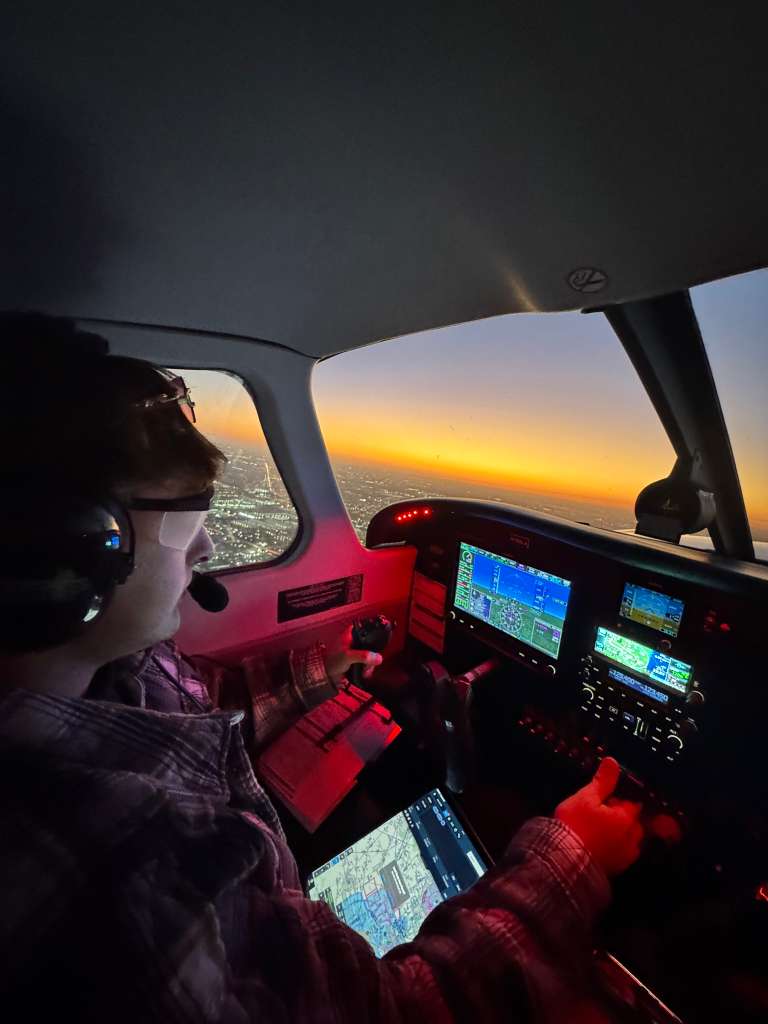
Avionics are another quiet hurdle. Modern training fleets often use glass panels, GPS, and autopilot. You do not need to be an expert on day one, but basic literacy helps a lot. At a minimum, you should work toward:
- Tuning frequencies and swapping standby/active
- Loading and activating a simple flight plan
- Understanding what the autopilot is doing and what mode it is in
The goal is to use automation as a helpful tool, not a crutch. A good rule is: hand-fly when you need to stay sharp or conditions are simple, and use automation to manage workload during busy ATC or complex procedures.
Then there is real life. Instrument training rewards consistency. To make steady progress, ask yourself:
- Can you fly often enough each week to keep skills from getting rusty?
- Do you have time set aside for ground study and chair flying?
- Are you ready for some weather cancellations, especially on stormy afternoons, and do you have a backup plan like simulator time?
It also helps to accept that most students need more than the legal minimums. If gaps in readiness show up mid-training, it is better to invest in fixing them than to rush ahead.
How Fly Legacy Aviation Assesses and Builds IFR Readiness
At Fly Legacy Aviation, we like to treat IFR readiness like a structured preflight. Before you jump into full instrument rating training in Florida, we can walk through a focused assessment that looks at:
- Ground knowledge, to see how solid your basics are
- Hand-flying in VFR, with attention to trim, scan, and smooth control
- Simple simulated IFR tasks, like holding altitude and heading while copying a clearance
Because we train in both Philadelphia and South Florida, our instructors see a wide mix of conditions and student backgrounds. That helps us spot the weak links that matter most in Florida, like weather sense and workload in congested airspace.
From there, we build a personalized training roadmap. That plan might include:
- A few VFR proficiency flights to tighten up aircraft control
- Extra radio practice in busy airspace to build confidence
- Simulator sessions to introduce holds, approaches, and weather scenarios
We like to use simulators to safely explore the trickier pieces of IFR, including:
- Sudden route or approach changes from ATC
- Pop-up storms that force immediate re-routes
- System failures that test your backup plans
By working through those scenarios in a sim first, you show up to the real Florida sky with a calmer mind and a clear plan.
Frequently Asked Questions About Instrument Rating Training in Florida
How Many Flight Hours Before Starting IFR Training in Florida?
Most pilots begin instrument training with at least 50 to 70 hours of total time, but readiness matters more than the exact number. You want to be fully comfortable with basic aircraft control, navigation, and radio communication so instrument lessons can focus on procedures and decision-making instead of relearning private pilot skills.
Is Summer a Good Time to Start Instrument Rating Training in Florida?
Yes, summer can be a good time, but you need to plan around frequent thunderstorms and afternoon convection. Summer brings valuable real-world weather experience, yet it can also mean more cancellations and schedule shifts, so early flight blocks and backup simulator sessions help you keep moving forward.
Do I Need to Be an Expert with Glass Cockpits Before I Begin?
You do not need to be an expert, but basic familiarity makes training smoother. Knowing how to tune radios, load a simple flight plan, and read your primary flight display before lessons start can save time and reduce stress, and many schools offer avionics orientation to get you comfortable.
How Hard Is the IFR Written Exam Compared with the Private Pilot Test?
The IFR written is usually more technical and detailed, especially in weather, regulations, and instrument procedures. With a structured ground school, good test-prep materials, and a steady study plan, most students find it manageable, and finishing the written early frees up mental space for cockpit learning.
How to Prepare Now for Instrument Training at Fly Legacy Aviation
You can start by reviewing private pilot fundamentals, practicing radio phraseology with live ATC feeds, and studying basic instrument procedures and weather products. After that, a focused readiness assessment with an instructor can show you exactly where you stand and what steps will best prepare you for instrument rating training in Florida.
Advance Your Skills With Professional Instrument Training
If you are ready to fly with more confidence and capability in all kinds of weather, our instrument rating training in Florida is designed to help you reach that next level. At Fly Legacy Aviation, we focus on real-world scenarios, personalized instruction, and a structured curriculum that fits your goals. Tell us about your experience and schedule by using our contact page so we can help you plan your path to becoming an instrument-rated pilot.
