
Guide to Your First Power-Off Approach in Philly
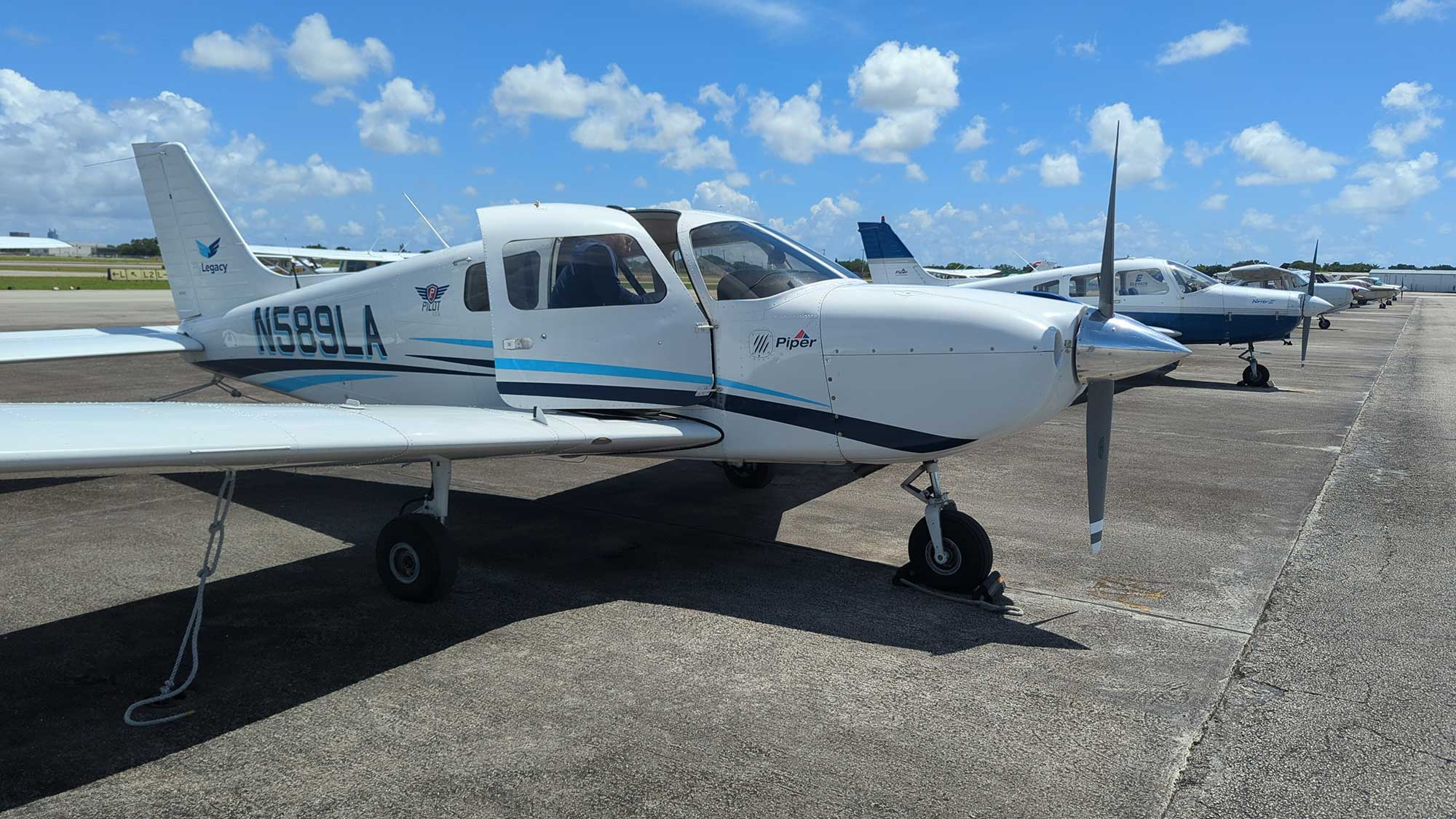
When we first introduce students to a power-off approach, it’s about more than just practicing one maneuver. It’s about thinking ahead, staying sharp, and understanding how to land safely when you can’t rely on engine thrust. For students in airplane flight training with multi-engine aircraft, this scenario becomes an important moment for learning real control. At Northeast Philadelphia Airport, Fly Legacy Aviation trains pilots from private pilot through commercial and flight instructor ratings, so power-off work fits into a broader training path rather than being a one-time exercise.
Flying near Philadelphia adds its own set of challenges during this approach. Between controlled airspace, active traffic patterns, and seasonal winds that pick up in spring, every minute in the pattern can feel quick. Add a twin engine aircraft with both throttles pulled back, and decisions need to be clean and confident.
Getting to Know the Power-Off Approach
A power-off approach means flying the landing pattern without adding thrust from the engines. We pull both throttles back to idle, simulating a scenario where the engines are no longer helping us descend. Students learn to manage both their glide path and their speed with altitude alone.
This is part of our multi-engine airplane flight training because it builds emergency readiness. We use it to simulate real-world engine problems in a safe, controlled space. Students usually start seeing this maneuver after they’ve built some comfort with regular patterns. The setup starts from downwind, abeam the intended touchdown point, and the rest comes down to smart timing and confident decisions on each turn.
Prepping for the Pattern in Philadelphia
At Northeast Philadelphia Airport, we train in a busy environment with an active control tower, and that means learning how to fly the pattern while fitting smoothly into the traffic flow. Spring brings steady northwest winds, which challenge students to adjust their glide paths earlier than they expect. Gusts can affect your descent faster when you’re not adding power, and that means you must act ahead of the plane, not behind it.
We emphasize timing as a big part of this approach. With the engines at idle, things move quicker. Small delays in turning base or final can put the aircraft too far from the runway, or too high to correct in time. Every leg of the pattern matters more, especially without a quick burst of power to help make up for a late turn.
How Multi-Engine Planes Handle the Glide
Twin engine aircraft behave differently during descent than single-engine planes. They’re often heavier, and that weight affects their glide performance, especially when gear and flaps start coming out. We focus on teaching students how to manage their descent while keeping the right speed. Pulling the gear too early, or letting airspeed drop, can throw off the whole final approach.
One thing we practice often is thinking about each leg of the pattern as its own job:
- On downwind, plan your abeam point carefully and check spacing
- On base, watch for wind drift and confirm you’re still descending evenly
- On final, stay steady on pitch control and watch your aiming point
Glide behavior in a multi-engine setup depends a lot on how well energy is paced across the pattern. Too tight, and you’re rushed. Too wide, and you may not make the runway.
Common Stumbles and How We Learn From Them
There are some common stumbles during early attempts at this maneuver. One is turning final too early and getting too high above the runway, which makes it tough to land where you want. Another is turning too late and sinking shorter than expected. Without engine thrust, flare timing becomes more exact, and it’s easy to round out either too high or too flat.
What helps is repetition. Each time we fly the pattern, students begin to notice how the aircraft feels on final, how sink rate changes, and how small moves on the yoke or throttle affect the rest. We always treat mistakes like part of the process. Every missed touchdown zone or awkward base leg holds something to learn from. With coaching, that learning sticks.
Refining Techniques Through Repetition
Every flight offers a chance to learn something new. Repetition allows students to notice the subtle differences between a smooth and a challenging pattern. Over time, consistent practice helps pilots develop a reliable feel for how the aircraft reacts to different wind conditions and timing adjustments. This methodical approach builds both skill and confidence, ensuring that the techniques learned during each practice flight become second nature. By reflecting on each flight, students can fine-tune their adjustments and optimize their glide paths, making each landing more controlled and deliberate.
From Nervous to Natural: Building Confidence Over Time
Practice with power-off patterns around Philadelphia does more than prepare students for emergencies. It sharpens their sense of control and helps them plan their landings with more awareness. Every part of the pattern gets stitched together with purpose, even when the airplane is quiet. Fly Legacy Aviation specializes in accelerated flight training with a modern fleet of Piper aircraft, so students have frequent opportunities to refine these approaches and turn them into reliable habits.
Multi-engine airplane flight training puts pressure on timing in a way that single-engine flying often doesn’t. And once students have flown this approach a few times, they start to trust themselves more. It’s not about getting it perfect every time, but about getting steadier, step by step, flight by flight.
Whether it’s your first pattern or your tenth, maintaining control during a power-off approach takes focus and practice. We help students build those instincts by flying patterns that sharpen timing and pattern awareness in real-world settings like Philadelphia. Ready to take your skills further? Our airplane flight training gives you the structure to stay sharp all the way to touchdown. At Fly Legacy Aviation, we support your progress flight by flight, contact us to get started.
