
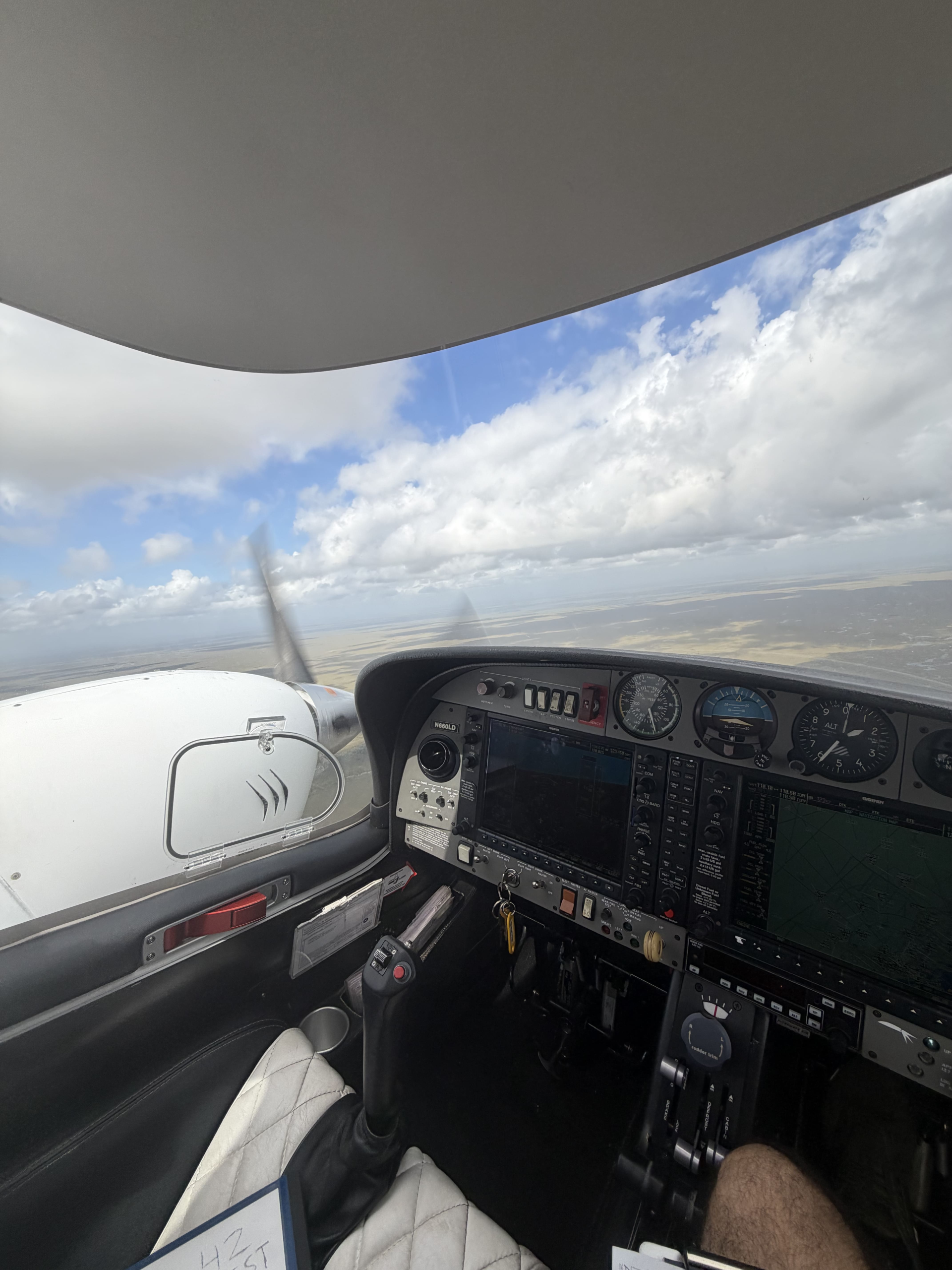
Make Your South Florida Training Time Count
Flight training in South Florida is exciting. The sky feels alive with traffic, radio calls, and constant motion. But that same energy can also slow you down. Crowded airspace, ATC delays, and fast-building storms can quietly eat away at your lesson time if you do not plan for them.
These bottlenecks can show up as longer lessons that cover less, training timelines that keep stretching, and checkrides that drift later and later on the calendar. When lessons get broken up or rushed, skills do not “stick” as well, and students feel like they are always playing catch-up.
We plan around these challenges on purpose. With structured syllabi, smart scheduling, and our bases in both Philadelphia and South Florida, we treat delays and holds as things you can manage, not just suffer through. In this post, we will walk through what actually creates local delays, how the seasons in South Florida affect your progress, and how good planning keeps your training on track.
How South Florida Airspace Really Impacts Your Lessons
South Florida sits under a very busy sky. You have major Class B and C airspace around Miami, Fort Lauderdale, and Palm Beach, plus busy flight training routes and a lot of general aviation traffic. Add airline traffic and business jets into the mix, and the radios almost never go quiet.
This affects lessons in ways new students often do not see coming:
- Longer taxi times and holds before departure
- Waiting in line in the pattern for your turn to land or take off
- Vectors or routing changes that pull you away from your planned practice area
- Slower climbs or descents while ATC spaces out traffic
During peak hours, like mid-mornings and late afternoons, these small delays stack up. A one-hour block in your mind can feel very tight in real life once you factor in taxi, run-up, ground delays, and pattern sequencing.
A well-structured program fights this by planning with the airspace, not against it. That can look like:
- Booking lessons in off-peak windows when possible
- Using less congested satellite airports when they fit the syllabus
- Doing solid pre-briefs so if ATC changes your route, you can still hit the main goal
In the long run, learning to fly here becomes an advantage. You get real experience working with complex airspace, staying ahead of your position, and speaking clearly and quickly on the radio. Those skills transfer well when you move into advanced ratings or professional flying.
Turning ATC Delays and Holds Into Training Tools
ATC delays in South Florida are not rare. On busy days, you might see:
- Ground holds because traffic is stacked up for departure
- Extended vectors so ATC can build spacing between airplanes
- Flow programs around holidays when everyone wants to fly at once
- Runway changes when afternoon storms shift the wind
For a normal lesson, this might mean you lift off later than planned, have less time in the practice area, or have to watch your fuel and daylight more closely. A delay in the morning can also affect later bookings, since airplanes and instructors are on tight schedules.
This sounds negative, but with the right mindset, it becomes solid training. When delays pop up, you get to practice:
- Time management and “do we still go or adjust the plan?” thinking
- Fuel checks and “what if we get one more vector?” planning
- Cockpit resource management and workload sharing with your instructor
- Calm, clear radio work with busy controllers
We plan for this by building buffer time into many lesson blocks, teaching students to recognize “hot windows” for delays, and making delay scenarios part of preflight planning and the debrief. That way, even if your route changes, your learning goal does not vanish.
Weather Holds and Thunderstorm Season Strategy
By late summer, South Florida gets into a steady rhythm: warm, humid mornings, building clouds by midday, then scattered storms in the afternoon. Sea breezes feed towering cumulus clouds, and some of those quickly grow into strong thunderstorms.
For training, that can cause:
- Last-minute ground holds while a cell passes over the airport
- Route changes to work around build-ups and storm tops
- Shortened solo cross-countries when the weather moves faster than expected
- Frequent go/no-go calls that seem to change every hour
Student pilots need to know the line between “flyable but bumpy” and “not safe.” That decision often depends on:
- Ceilings and visibility relative to VFR minimums and your personal limits
- Convective SIGMETs that warn about strong thunderstorms
- Lightning, gust fronts, and outflow boundaries near your route
- Storm speed and movement based on radar and trends
Structured training turns this into a weather lab. Instead of just canceling, we use marginal days to:
- Read METARs, TAFs, and radar with a local eye
- Talk through seasonal patterns, like when storms usually build and fade
- Practice risk management: “What are our outs if this cell drifts east?”
Sometimes you still stay on the ground, but those holds can become strong lessons in judgment, not wasted hours.
Smart Scheduling and Dual-Base Flexibility
One of the best tools you have as a student is the clock. Planning the time of day carefully can save many headaches around flight training in South Florida.
Many students see success with a simple rhythm:
- Morning for flights, when the air is smoother and storms are less likely
- Early afternoon for ground school, chair flying, or simulator sessions
- Evenings for pattern work or shorter hops after storms calm down
You can also match the type of lesson to the likely traffic and weather. For example:
- Reserve the best low-congestion windows for first solos and key checkride prep
- Use busier times for pattern work, radio practice, and scenario training
- Keep backup ground or sim lessons ready so a “lost” flight block still moves you forward
Another powerful tool is location flexibility. With training bases in both Philadelphia and South Florida, you can plan parts of your program around seasonal trends. Some students choose to:
- Do more VFR time in one region when the weather is more steady there
- Shift instrument or cross-country phases based on where conditions are better
- Avoid the worst of late-summer storms in one area by focusing on another phase elsewhere
This mix also makes you a more rounded pilot. You experience different ATC facilities, terrain, and weather systems, which prepares you for flying in many parts of the country, not just one region.
Frequently Asked Questions About South Florida Flight Training
How Do Airspace Bottlenecks Affect My Overall Training Time?
Airspace bottlenecks can stretch taxi, takeoff, and transit times, which may reduce how many minutes you spend on each lesson’s main goal. Over a full program, that can push your timeline longer if no one is planning around it. With smart scheduling, efficient routes, and built-in buffer time, you can stay close to your original training plan even with busy skies.
Is Flight Training in South Florida a Good Choice for Beginners?
Yes, it can be a strong place to start. The airspace is busy, but with a clear syllabus and patient instructors, beginners learn safely from day one. New pilots quickly build confidence on the radios, in crowded patterns, and near complex airspace, which helps a lot when they move into advanced ratings.
How Can I Plan Around Daily Summer Thunderstorms?
The best approach is to favor morning flights, since weather is usually calmer then, and use afternoons for ground and simulator work. Work with your instructor to track local trends so you both have a “Plan B” for every booking. That way, when storms pop up, you still get value from the time you set aside for training.
Will ATC Delays Increase My Training Costs?
They can if your lessons are not structured well. If you treat delay time as “dead time,” it does not help you. But when you use that time for radio practice, decision-making, and in-flight replanning, it still supports your training goals. A school that understands local bottlenecks can help you get strong learning value from every block of time.
Questions to Ask a Flight School Before Training in South Florida
Ask how they schedule around peak traffic and common weather patterns. Ask whether they use satellite airports or alternate routes to cut down on bottlenecks, and how they handle weather or ATC-related changes. It also helps to ask about instructor availability, simulator options, and any chance to train from multiple bases so your progress stays steady all year.
Launch Your South Florida Flight Training Journey With Confidence
If you are ready to turn your aviation goals into real progress, our flight training in South Florida is built to give you structure, support, and clear next steps. At Fly Legacy Aviation, we tailor your training path so you know exactly what to expect from day one through checkride. Reach out through our contact page and we will walk you through enrollment, scheduling, and financing options so you can get started on your timeline.
