
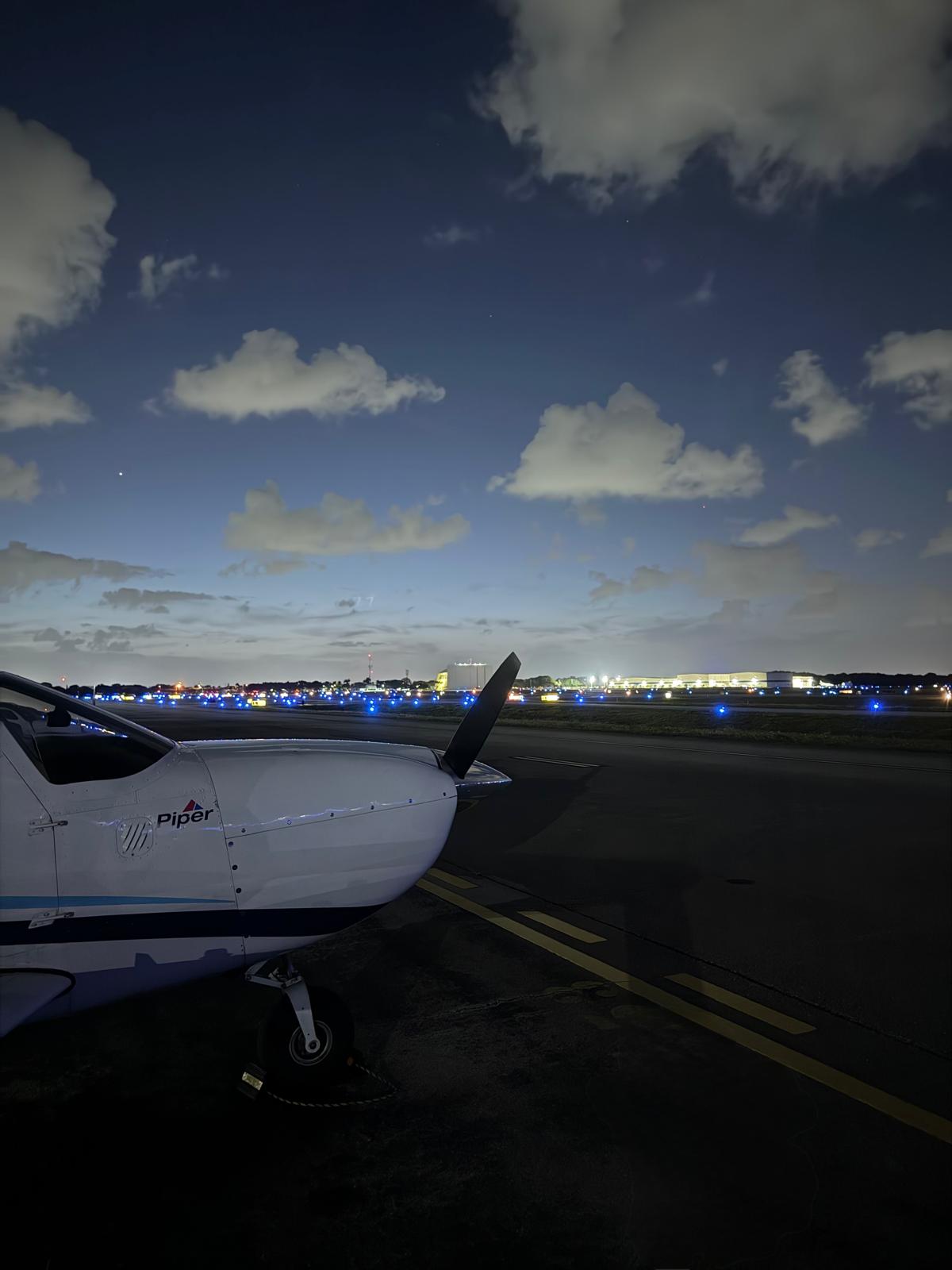
Launch Your Multi-Engine Rating Faster in South Florida
Accelerated multi-engine training is one of the fastest ways to level up your flying and get closer to airline goals. In South Florida, consistent VFR days, long daylight, and busy airspace give you a lot of quality learning in a short window. When you match that environment with a clear plan, you can move from first lesson to checkride efficiently and with confidence.
At our South Florida bases, we use a structured, airline-style approach so motivated pilots can finish a multi-engine rating in weeks instead of months. In this guide, we will walk through a practical timeline, a sample weekly syllabus, how flight blocks work, why stage checks matter, and how to turn time-building flights into focused checkride prep. We will also explain how our limited-time $100 off promo for multi-engine training in Florida, available through August 15, fits into a bigger airline pathway plan.
Mapping Your Accelerated Multi-Engine Timeline
A realistic accelerated plan usually looks like one of these:
- Full-time: about 7, 14 days of focused training
- Part-time: around 3, 4 weeks with several flights each week
To get the most from this pace, you should already have:
- At least a private pilot certificate, ideally with an instrument rating
- A current medical and recent flight time
- Comfortable basic instrument skills and radio work
The training flow generally moves in this order:
- Aircraft and systems orientation, performance and limitations
- Basic VFR maneuvers in the twin
- Engine-out procedures and single-engine handling
- IFR and abnormal operations in a multi-engine setting
- Final checkride polishing, both oral and flight
We schedule early-morning flights to stay ahead of heat and afternoon storms. Midday is perfect for ground lessons on systems, performance, and procedures while the weather is unsettled. When useful, we add evening simulator sessions to run through engine failures, IFR scenarios, and checklists in a low-stress setting.
This progression follows the same kind of order you see in airline training: learn the airplane, add abnormal situations step by step, then tie everything together with good decision-making and crew-style habits.
Weekly Syllabus and Daily Flight Block Structure
Here is how a two-week accelerated plan often looks.
Week 1 focuses on getting comfortable in the twin and learning the basics:
- Multi-engine systems and performance
- VMC awareness and aerodynamics
- Takeoffs, landings, and pattern work
- Basic engine-out drills and directional control
A typical day in Week 1 might include:
- A 2 to 3 hour flight block in the morning
- Short preflight brief to set goals and review procedures
- Focused debrief right after landing with notes for self-study
Week 2 builds on that base and adds more complex situations:
- Advanced engine-out scenarios, including at altitude and near the airport
- Single-engine instrument approaches
- Emergency procedures and checklist discipline
- Mock checkrides, both oral and flight, to bring everything together
Flight block scheduling keeps your day predictable:
- Set AM or PM blocks so you can plan rest, meals, and study
- Dedicated time windows for briefing and debriefing
- Space for self-study, chair flying, and checklist practice
- Flexible re-booking when South Florida weather offers learning chances like real in-flight deviations or IFR work
Our instructors watch your performance in each block and adjust the intensity. If a maneuver is not yet at Airman Certification Standards level, we use quick reviews and short “micro-checks” at the start of the next flight to clean it up before adding new tasks.
Stage Checks That Keep You Checkride-Ready
In an accelerated course, it is easy to feel like everything is happening fast. Stage checks help keep that speed from turning into stress. A stage check is a structured progress check with a different instructor. The goal is to spot weak spots early and make sure there are no surprises on the practical test.
Typical stage check points include:
- After initial maneuvers and basic multi-engine handling
- After main engine-out training and single-engine operations
- Final mock oral and mock flight just before the checkride
Each stage check gives you clear feedback on:
- Airwork: steep turns, slow flight, stalls in the twin
- Engine-out skills: identification, feathering, directional control
- Systems understanding: fuel, electrical, props, performance
- Checklist use, situational awareness, and cockpit communication
The notes from the stage check shape your next few days. You might see:
- A focused remedial flight on one or two weak maneuvers
- Extra ground time on a system you are not fully comfortable with
- Repetition of previously weak items until they feel routine
This stage-check rhythm is similar to airline and crew training, where independent checks are normal and expected. It encourages a professional attitude and helps you think like a multi-crew pilot, even when you are flying with just one instructor.
Combining Time-Building With Smart Checkride Prep
If you need multi-engine hours for airline or Part 135 goals, you do not want to just “burn gas.” Cross-country time-building can double as targeted checkride prep when it is planned well.
Good time-building legs around South Florida might include:
- Coastal cross-country routes that mix busy airspace with smoother segments
- Real-world IFR when appropriate, including clearances and approach work
- Fuel planning and performance calculations that account for weight, balance, and hot weather
On these flights, instructors can weave in:
- Engine-out simulations at safe altitudes
- Emergency checklist practice and systems discussions
- Single-engine approaches under the hood or in real IMC when suitable
- Constant cockpit resource management, including workload sharing and briefings
After you earn the rating, our fleet and rental options give you ways to keep building quality multi time. The $100 off promo for multi-engine training in Florida can be a smart starting step that leads into a longer-term airline pathway plan built around structured cross-country flying and continued training.
Frequently Asked Questions About Multi-Engine Training in South Florida
Who Is a Good Candidate for Accelerated Multi-Engine Training?
A good candidate already holds at least a private pilot certificate, is current or recently current, ideally has an instrument rating, and can set aside focused time for intensive flying and study without major outside distractions.
How Long Does Multi-Engine Training Usually Take in South Florida?
Most motivated pilots can complete their multi-engine rating in about 7, 14 days of full-time training, with part-time options available over several weeks if their schedule requires more flexibility.
Can I Use Multi-Engine Time-Building Toward Airline Minimums?
Yes, multi-engine hours are highly valuable for airline and Part 135 hiring, and structured cross-country time-building can help you build quality multi time while reinforcing checkride-level skills.
What Should I Study Before Starting Multi-Engine Training?
It helps to review multi-engine aerodynamics, weight and balance, performance charts, aircraft systems, IFR procedures, and the Airman Certification Standards, especially the sections related to instrument flying and emergencies.
How Do I Claim the $100 Off Multi-Engine Promo in Florida?
To use the $100 off multi-engine training offer in Florida, you need to get in touch before August 15, mention the promo, and work with the training team to choose your dates and lock in a slot.
Launch Your Aviation Career With Confidence
If you are ready to turn your passion for flying into real-world skills, our aviation training in South Florida is designed to help you move forward with clarity and purpose. At Fly Legacy Aviation, we tailor our instruction to your goals so you can train efficiently and build experience that truly prepares you for the cockpit. Reach out to our team with your questions or to schedule a visit through our contact page.
