
Choosing Flight Training in South Florida: Airspace, Airports, Scheduling
Train Faster Under South Florida’s Clear Skies
Choosing a flight training course is a big decision, and where you train matters just as much as how you train. South Florida offers something special for student pilots: a combination of clear weather, long flying days, and busy but well-structured airspace that helps you build real-world skills from the start.
Compared with northern climates that lose days to snow, ice, and low clouds, South Florida often lets you keep your training schedule steady. Fewer weather cancellations usually means faster progress and stronger retention, because you are not waiting weeks between lessons. At the same time, the coastline, nearby Class B and Class C airspace, and many different airports give you a wide range of experiences in a compact area.
When you compare schools, three things matter a lot: how they use the coastal airspace, which airports you train at, and how flexible they are with your schedule. A school that understands busy, layered airspace and also respects your time can set you up well if you plan to fly for fun or turn flying into a career. At Fly Legacy Aviation, we train in both the complex Philadelphia area and South Florida’s coastal environment, so we pay close attention to how each of these pieces supports your long-term goals.
Understanding Coastal Airspace Complexity in South Florida
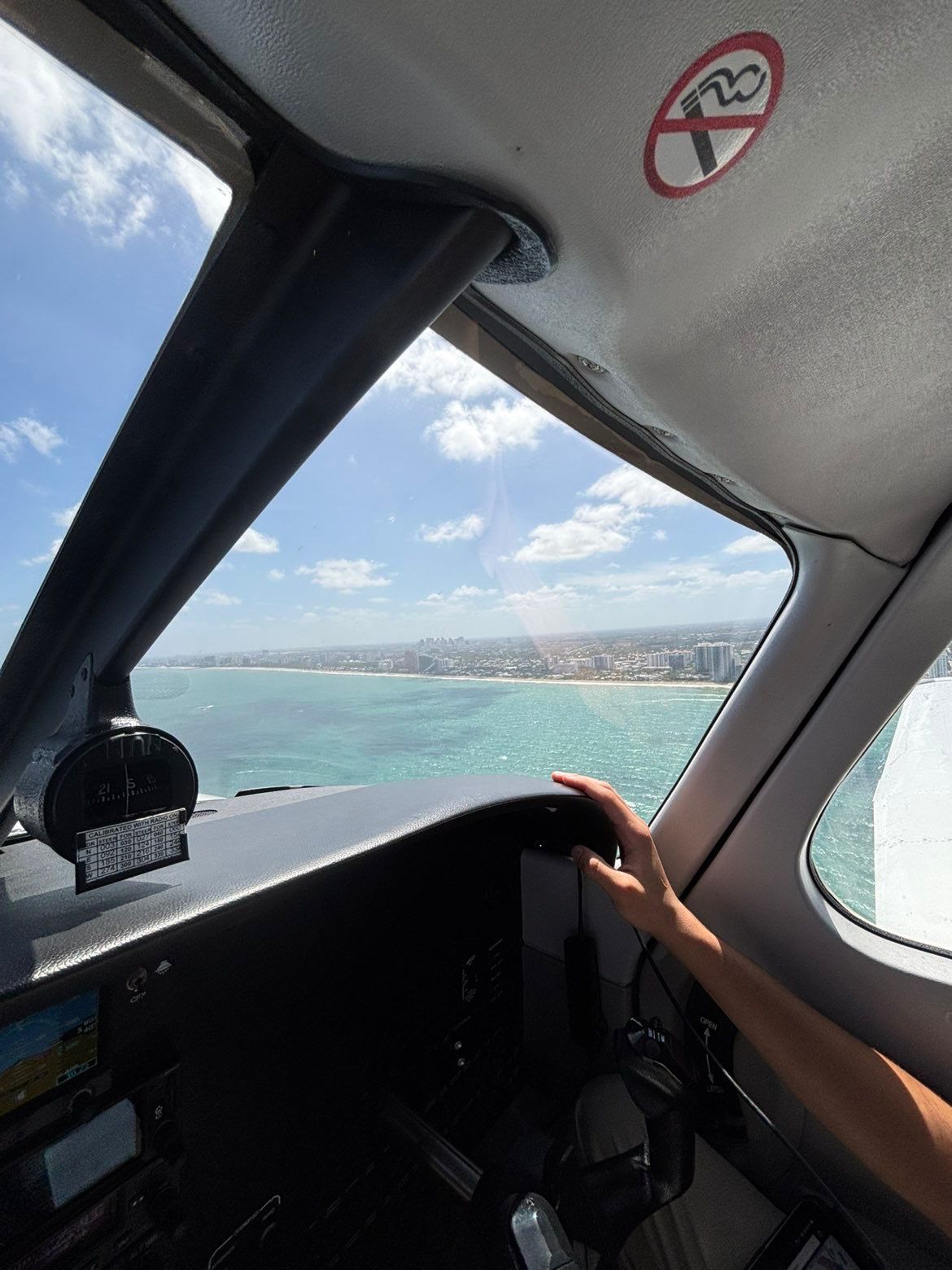
South Florida sits under and around multiple controlled airspace areas. Large hubs such as Miami, Fort Lauderdale, and Palm Beach influence a wide stretch of sky. Out near the shoreline, you often have stacked layers of Class B above and Class C or D below, with busy arrival and departure routes for airline and business traffic.
For a student, that can sound intense at first, but learning here can give you strong confidence. You get used to:
- Talking to ATC in clear, calm language
- Watching for traffic in high-density areas
- Following clearances near major airline routes
Handling this kind of airspace early helps you feel ready for professional flying later. You learn how to stay ahead of the airplane, manage the radio, and keep your situational awareness sharp, all while still working through the basics of control and navigation.
The key is how your instructors structure your exposure. Good training does not throw you into the busiest Class B corner on day one, instead, you might start in quieter practice areas over inland terrain or water, where you can focus on:
- Basic maneuvers
- Takeoffs and landings at lower-traffic airports
- Building comfort with the local geography
Then, as your skills grow, your lessons add time near or inside Class C and on the edges of Class B, always with a plan and clear learning goals. When you compare flight schools, it helps to ask:
- How soon do students begin working with ATC in controlled airspace?
- Do you use dedicated practice areas away from the heaviest traffic?
- How do lessons change as students move from solo practice to cross-country flying?
The answers tell you whether the school has a thoughtful path from simple to more complex flying.
Comparing Airport Options and Practice Areas
Your home airport and the nearby fields you visit will shape a big part of your training experience. In South Florida, there are many towered and non-towered airports within a short flight, which is a major advantage if your school uses them well.
Training across more than one type of airport helps you learn to:
- Work with control towers and also self-announce at non-towered fields
- Handle different runway lengths and widths
- Adjust to different traffic patterns and local procedures
Longer, wider runways can feel more forgiving at first and are great for initial landings and pattern work. Shorter or narrower runways, when added later, help you learn precise control and planning. It is also helpful if your training area has a mix of instrument approaches and good runway lighting, since this supports future ratings and night flying.
South Florida can see seasonal changes in traffic, especially at coastal airports that attract visitors. A smart flight training course will expose you to both busy times and quieter periods so you learn to manage ground delays, longer takeoff lines, and more radio calls, without feeling rushed.
A strong advantage of Fly Legacy Aviation’s South Florida setup is the quick access to multiple airport types in one lesson. You can practice at your home field, then visit another towered or non-towered airport and a nearby practice area, all without wasting time or flight time on long reposition legs. That keeps your focus on learning, not just traveling.
Schedule Flexibility and Accelerated Summer Training
Your schedule is a big factor in how fast you finish a flight training course. Summer is often a perfect time to start or speed things up, especially in South Florida, because many students have school breaks and the days are long with plenty of daylight.
Different training models fit different lives:
- Fixed-schedule programs for those who prefer set days and times
- Weekend or evening options for people with full-time jobs
- Intensive full-time training for students who want to progress as quickly as possible
Consistency is more important than sheer speed. Flying two or three times a week, with steady ground study in between, usually keeps you moving forward without burning out. This is where aircraft and instructor availability matter. A school with a solid fleet and good dispatch reliability can keep your plan on track, even when summer demand is high.
At Fly Legacy Aviation, we put a lot of effort into helping students build realistic training calendars. That includes matching you with instructors whose schedules line up with yours, planning when to add solo flights and cross-countries, and syncing your ground lessons to what you are doing in the cockpit. South Florida’s generally flyable weather then helps you stick to that plan instead of constantly rescheduling.
Choosing the Right Flight Training Course for Your Goals
Before you pick a flight training course, it helps to be very clear on your end goal. Are you aiming to:
- Fly for fun on weekends?
- Earn a license to travel with family and friends?
- Build a full professional career as an airline or corporate pilot?
Each path shapes the best pace, structure, and training focus for you. Recreational students might pick a slower schedule that fits around other hobbies. Career-minded students often want a more structured progression with defined milestones and a plan that carries them beyond the private pilot level.
When you compare courses, take a close look at:
- The written syllabus and how each lesson builds on the last
- How often simulators are used to practice procedures and emergencies
- The support offered for knowledge tests and checkride prep
Safety and student outcomes should always come before convenience. Ask about maintenance practices, instructor experience levels, and how often students complete their training and move on to the next certificate or rating.
At Fly Legacy Aviation, we design structured, career-focused pathways that blend coastal airspace experience in South Florida with training in complex environments like Philadelphia. That mix of coastal operations, varied airports, and flexible scheduling helps prepare you for whatever kind of flying you choose next.
Frequently Asked Questions
How Long Does a Typical Flight Training Course Take in South Florida?
Most students can complete a private pilot flight training course in about 3, 6 months if they fly 2 to 3 times per week and keep up with ground study between lessons.
Is Training in Coastal Class B or C Airspace Hard for Beginners?
With a structured syllabus and patient instructors, beginners start in quieter practice areas, then gradually add operations in Class C and near Class B airspace as their skills and confidence grow.
Do I Need Prior Aviation Experience Before Enrolling?
You do not need any prior aviation experience for an entry-level course, because training begins with basic flying skills, aerodynamics, and aircraft systems before moving to more advanced topics.
How Does South Florida Weather Impact My Training Schedule?
South Florida weather usually supports regular flying, and while afternoon thunderstorms can pop up, schools plan around common patterns to keep cancellations and delays as low as possible.
What Should I Look for When Comparing Flight Schools in South Florida?
Focus on safety culture, instructor quality, aircraft maintenance, clear training syllabi, access to diverse airspace and airports, schedule flexibility, and the track record of student success and progression.
Take The First Step Toward Becoming A Confident Pilot
Enroll in our comprehensive flight training course and start building the skills you need to fly with confidence. At Fly Legacy Aviation, we provide structured instruction, experienced instructors, and a supportive training environment tailored to your goals. If you are ready to move from dreaming about flying to actually taking the controls, reach out to us through our contact page so we can help you get started.
