
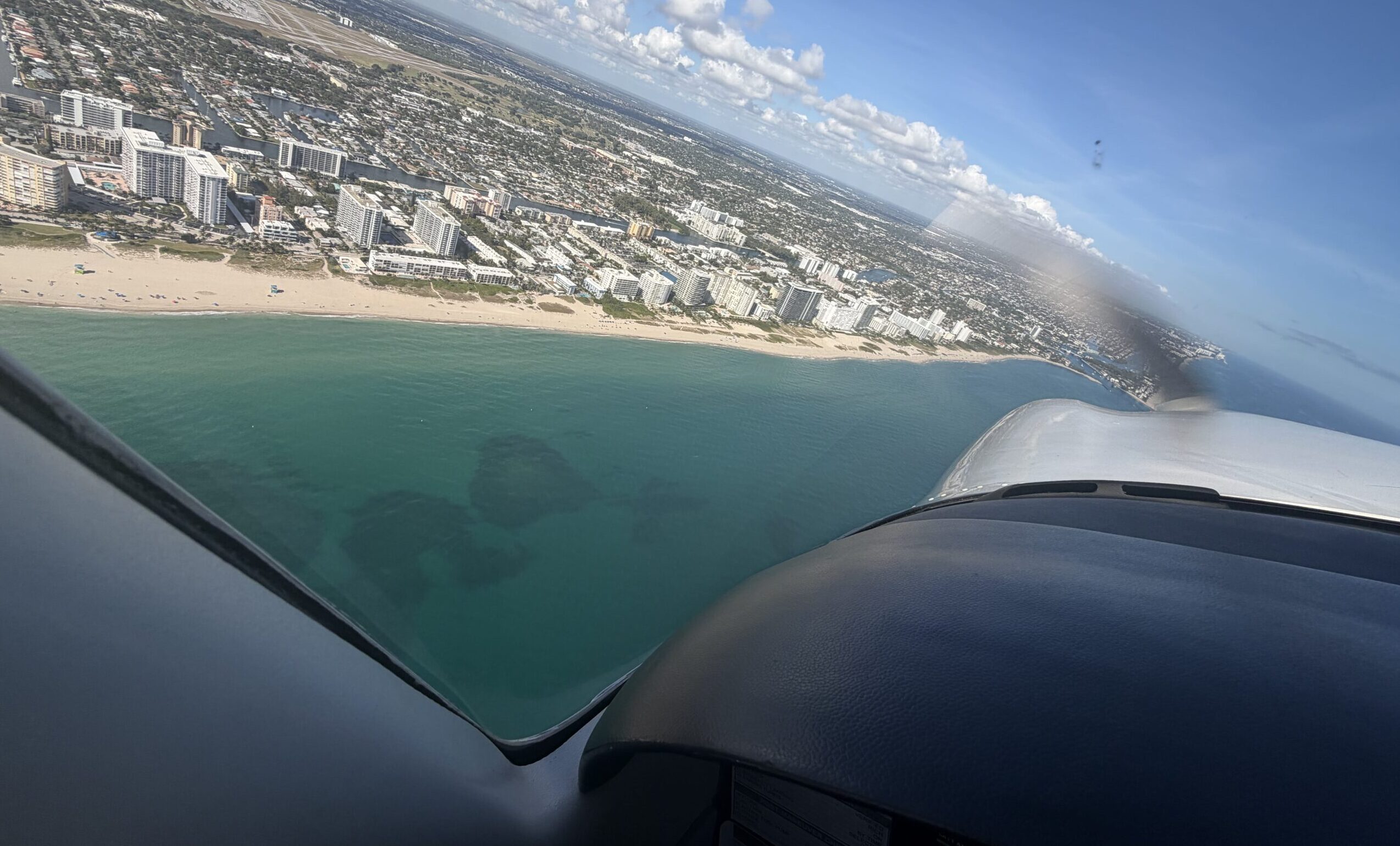
Understanding Pattern Entry Techniques at Pompano Beach
Flying patterns are a big part of learning how to stay safe in the sky. At airports like Pompano Beach, Florida, where traffic can get heavy, these patterns help everyone know where to go and when to land. That is especially true for students training in multi-engine planes, which move faster and need more space to land. At Fly Legacy Aviation’s South Florida campus at North Perry Airport in Pembroke Pines, training takes place on a 3,350 foot runway with an operating control tower, so pattern work feels like real-world operations from the very first lessons.
When someone trains at a flight school South Florida pilots trust, they have to understand how different the air feels near the coast. Afternoon winds can pick up speed, and the pattern may include many types of aircraft, fast, slow, and everything in between. For those training in this environment, practicing pattern entries is about timing, awareness, and building steady habits from day one.
Understanding the Traffic Pattern at Pompano Beach
Picture a giant rectangle in the sky. That is what an airport pattern looks like to a pilot. It is a simple shape that gives each plane its path to follow as it lines up for landing. Depending on how the runway is set up, we might fly it from the left side or the right. Most airports, including Pompano Beach, use left-hand patterns unless the chart shows otherwise.
Here is what matters in the pattern:
- Every plane flies the same shape at the same heights
- We follow the order: upwind, crosswind, downwind, base, and final
- Staying on path makes sure no one cuts across or gets too close
Even with that clear layout, things can change fast. That is why it is so important for us to know the local routine and review charts before each flight. Pompano Beach’s mix of student planes and visiting traffic means we always keep scanning and listening.
How Multi-Engine Planes Enter the Pattern Differently
Flying a multi-engine plane is not just about having an extra engine. These aircraft tend to fly faster, climb higher, and cover more ground in less time. When entering the pattern at a busy place like Pompano Beach, everything happens quicker.
That speed changes how we line up:
- We start planning earlier, miles out from the airport
- We use quicker descent rates to make room for slower traffic
- Spacing matters more, so we do not close in on other planes too fast
Radio calls become important. At each step, before joining downwind, before turning base, we let the tower and other pilots know where we are. A short call such as “twin Cessna entering left downwind Runway 10” helps everyone picture where we are. It keeps the pattern steady and safe, even when things start to get busy.
Most Common Mistakes and How to Avoid Them
Most pilots have experienced a close call during training, often because of small things like turning too soon, flying too wide, or missing a call. At Pompano Beach, where there is often more than one plane in the pattern, these errors stand out more.
Here are some examples we keep in mind:
- Turning base without checking if someone is already there
- Flying too tight a pattern and rushing the final approach
- Forgetting to make a position call when entering from a different leg
To avoid these mistakes, we focus on important habits. We double-check spacing before turning and slow the aircraft down earlier than feels natural. Multi-engine planes require active management to keep from accelerating too much, so planning is essential. We also listen carefully. Even when not transmitting, we stay alert to what is happening around us.
Getting Comfortable with Pattern Work Through Practice
Training near Pompano Beach is a way to develop good habits quickly. The airspace is busy enough that there is no room for complacency. From the beginning, instructors help students run through different pattern entries, including straight-in, midfield crosswind, and overhead entries if needed. Our accelerated multi-engine course in the Diamond DA42 is structured as a focused 6 day program with 10 hours of flight instruction and 10 hours of ground training, so students stay immersed in pattern work and coastal operations while they prepare for their multi-engine checkride.
On windy spring days, approaches can become bumpy or cause extra drift during turns. Smooth pattern entries are especially important in these conditions. With practice, flying that rectangle becomes second nature. We spend less time worrying about what comes next and focus more on how the flight feels moment by moment.
The repetition helps:
- We get used to flying with changing speeds and spacing
- We learn to make every step on the radio calm and clear
- Our inputs become more precise on the controls
There is no rush to learn everything at once. We keep practicing in the pattern until the flow feels natural.
Smooth Landings Start with Smart Entries
Pattern entries cannot be skipped during training. They set the tone for the landing and help us stay in sync with others flying nearby. At airports like Pompano Beach, maintaining that rhythm means thinking ahead.
Pattern work, in particular, teaches patience to multi-engine pilots. We avoid letting our speed push us too close to slower traffic, and we do not wait too long to act when spacing becomes tight. Every call, turn, and throttle adjustment helps develop better habits. Each flight in and out of the pattern makes us more steady and more focused, step by step.
Learning to fly multi-engine planes in busy airspace requires consistent practice. At Fly Legacy Aviation, we help students develop those skills near Pompano Beach, Florida. With actual pattern work, changing coastal winds, and plenty of traffic to keep you attentive, it is a great place to build confidence in the cockpit. Our instructors guide students through every pattern type so that timing, speed, and spacing become second nature. Choose a trusted flight school south Florida pilots count on to train in real-world conditions, and contact us today to get started.
