
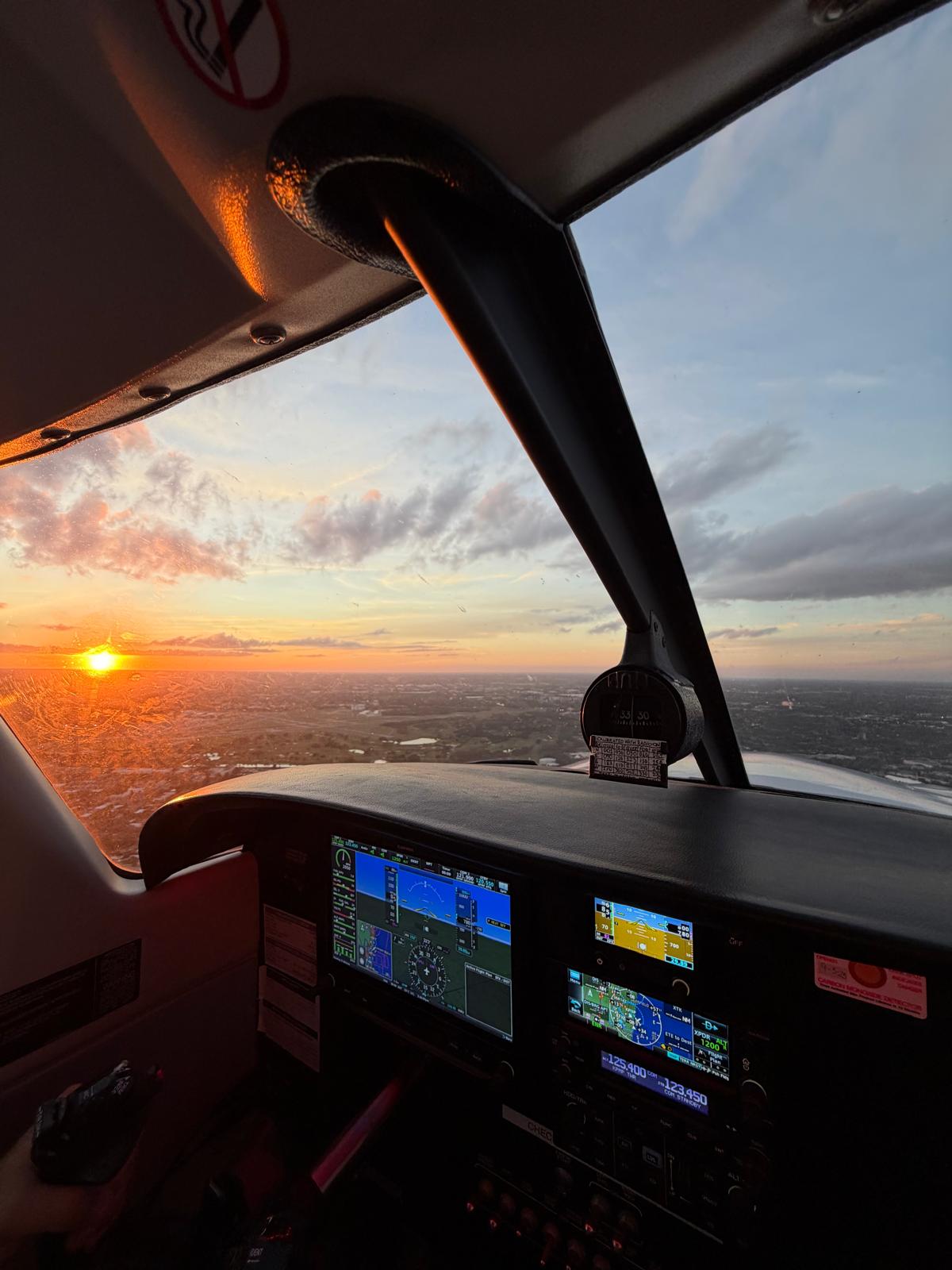
Inside Flight Training South Florida Students Get Before Summer Storms
Summer Skies, Real-World Skills: Why Storm Season Matters
Flight training in South Florida puts weather front and center. Clear blue skies in the morning can turn into dark clouds, gusty winds, and lightning by mid-afternoon. If you are learning to fly here, that daily rhythm is something you feel from your very first lesson.
Those fast-building summer storms are not just an inconvenience. They are a real-world classroom that helps new pilots build judgment, planning skills, and respect for weather. The best training does not focus only on smooth, perfect days. It teaches you how to think ahead, spot trouble early, and make smart choices long before a storm is a threat.
At our South Florida base, we treat summer weather as part of the lesson plan. With structured programs and professional instructors, we turn what some pilots fear into an organized way to grow your skills safely and steadily.
Understanding South Florida’s Summer Weather Playbook
South Florida has a repeatable pattern many days in summer. Mornings start warm and calm, with light winds and good visibility. As the sun heats the ground, moisture rises, and small puffy clouds begin to grow taller and darker.
By early to mid-afternoon, those clouds can build into strong thunderstorms. For pilots, that can mean:
- Rapid changes in visibility
- Strong updrafts and downdrafts
- Heavy rain and gust fronts
- Lightning and extreme turbulence
Learning to fly here means learning the line between “flyable but hot and bumpy” and “no-go, storms building fast.” That line is not always obvious to a new student. This is where local experience matters.
Our instructors help students read the South Florida pattern in simple, clear ways. You learn how sea breeze fronts can trigger storms inland, how radar returns tend to grow along certain corridors, and why a harmless-looking cumulus can quickly turn into a towering giant that you never want to be near. You also learn how coastal and inland areas can have very different weather at the same time, and how that affects your route choices.
Ground School Before the Clouds: Weather and Risk Basics
Before we expect any student to make decisions in real summer weather, we start with the basics on the ground. Weather is not just a chapter in a book; it is part of almost every lesson.
Students learn to read and discuss:
- METARs for current conditions
- TAFs for short-term forecasts
- Radar and satellite images
- Convective SIGMETs and thunderstorm outlooks
Along with the weather tools, we spend time on risk management. New pilots are taught to set personal minimums, decide on clear go or no-go rules, and always keep a backup plan in mind. We talk through “what if” questions: What if the storm builds faster than forecast? What if the destination gets a storm but the alternate stays clear? How will you adjust fuel and route?
Scenario-based learning is a big part of this. We walk through past local weather days, what the forecasts showed, how the radar evolved, and what smart pilots did in response. Students practice decision-making in low-pressure settings, long before they see real convective weather from the cockpit. This helps them notice early warning signs, like small buildups forming in the same area day after day, or a radar line starting to connect into a solid wall.
In the Cockpit: Training Around Summer Storms
When it is time to fly, we build the day around the expected weather. In South Florida, that usually means primary lessons early in the morning, when the air is calmer and storms are still hours away. As the day heats up, students see how the sky changes and learn to match that with what they saw on the forecast.
In the airplane, we focus on practical storm-season skills, such as:
- Spotting developing cells visually
- Planning deviations well before you get close
- Picking altitudes that keep you in smoother air
- Staying far away from towering cumulonimbus clouds
Students practice real-time decisions with an instructor beside them. That can include turning back earlier than planned, taking a longer route around buildups, or choosing a nearby airport to wait things out. Each choice is talked through so the student understands not just what to do, but why it is the safest path.
Communication is also a big part of this training. We teach students how to work with Air Traffic Control to:
- Request flight following for extra support
- Ask for updated weather and pilot reports
- Clearly state their intentions when the weather is changing
This turns summer storms from a surprise into a set of challenges the student already knows how to handle.
Safety Systems, Simulators, and Career-Path Readiness
Not every weather lesson needs real lightning outside the window. Simulators let us safely explore advanced storm situations you may not see often in the real airplane. In a sim, instructors can build realistic convective weather, adjust wind and visibility, and pause the scenario to teach in detail.
We also train students on common modern avionics and safety tools, such as:
- ADS-B weather displays
- Onboard radar when it is available
- Lightning and storm tracking features
Just as important, we stress that these tools support good judgment but never replace it. A student learns to compare what the panel shows with what they see out the window, what they heard in the briefing, and what ATC is reporting. The goal is to build a pilot who uses technology wisely, not blindly.
For students on a career path, this kind of training pays off later. Airlines, corporate operators, and charter companies all expect pilots who respect convective weather and act conservatively around it. The habits built during early flight training in South Florida carry through instrument training, commercial ratings, and more advanced instruction.
Why Flight Training in South Florida Builds Stronger Pilots
Some pilots learn to fly in places where the weather is calm and predictable most days. That can be comfortable, but it does not always stretch decision-making skills. South Florida summer, on the other hand, asks for constant planning and flexibility.
By learning to fly here, students get daily practice in:
- Reading and re-reading forecasts
- Adjusting departure times and routes
- Watching the sky for clues and trends
- Making confident, conservative calls
That builds strong situational awareness and better judgment than flying only in picture-perfect conditions. Because our school also has a base in the Northeast, students can experience different seasonal patterns, from hot, stormy afternoons in Florida to cooler, changeable systems farther north. Pilots who see more than one type of weather build skills that serve them well in every phase of their aviation life, from weekend trips to professional cockpits.
FAQ
How Do Summer Storms Affect My Flight Training In South Florida?
Flight schools in South Florida plan around the daily storm cycle by focusing most training flights in the early morning and sometimes early evening, when conditions are usually more stable. If storms build faster than expected, lessons may switch to ground school or simulator sessions so your progress keeps moving safely.
Is It Safe to Learn to Fly During Thunderstorm Season?
Yes, when training is structured and conservative. Students are not taken into thunderstorms. Instead, they are taught to recognize risk early, plan safe routes, and avoid convective weather. The presence of storms becomes a tool for learning better judgment, not something to push into.
What Weather Skills Will I Learn in South Florida Flight Training?
You will learn how to read METARs and TAFs, interpret radar and lightning data, and understand alerts like convective SIGMETs. You also practice real-world actions such as route deviations, diversions, fuel planning around storms, and adjusting plans when the forecast changes.
Do I Need Special Equipment to Fly Near Summer Storms?
Student pilots usually train in aircraft equipped with standard radios and often ADS-B weather displays. These tools help you see and avoid bad weather, but the main safety margin comes from good planning, instructor guidance, and conservative choices. Training focuses on using equipment as support, not as the only line of defense.
How Can I Prepare Before Starting Summer Flight Training?
Before your first lesson, you can review basic weather terms, start checking local forecasts each day, and learn the layout of common aviation weather apps. It also helps to plan for the heat by staying hydrated and keeping a flexible mindset so you are ready for schedule changes when storms roll through.
Start Your South Florida Flight Training Journey With Confidence
If you are ready to turn your aviation goals into real-world skills, our flight training in South Florida is designed to support you at every step. At Fly Legacy Aviation, we provide structured programs, experienced instructors, and a clear path from your first lesson to advanced ratings. Talk with our team so we can help you choose the right starting point for your experience level and schedule. To get started or ask questions, simply contact us today.
