
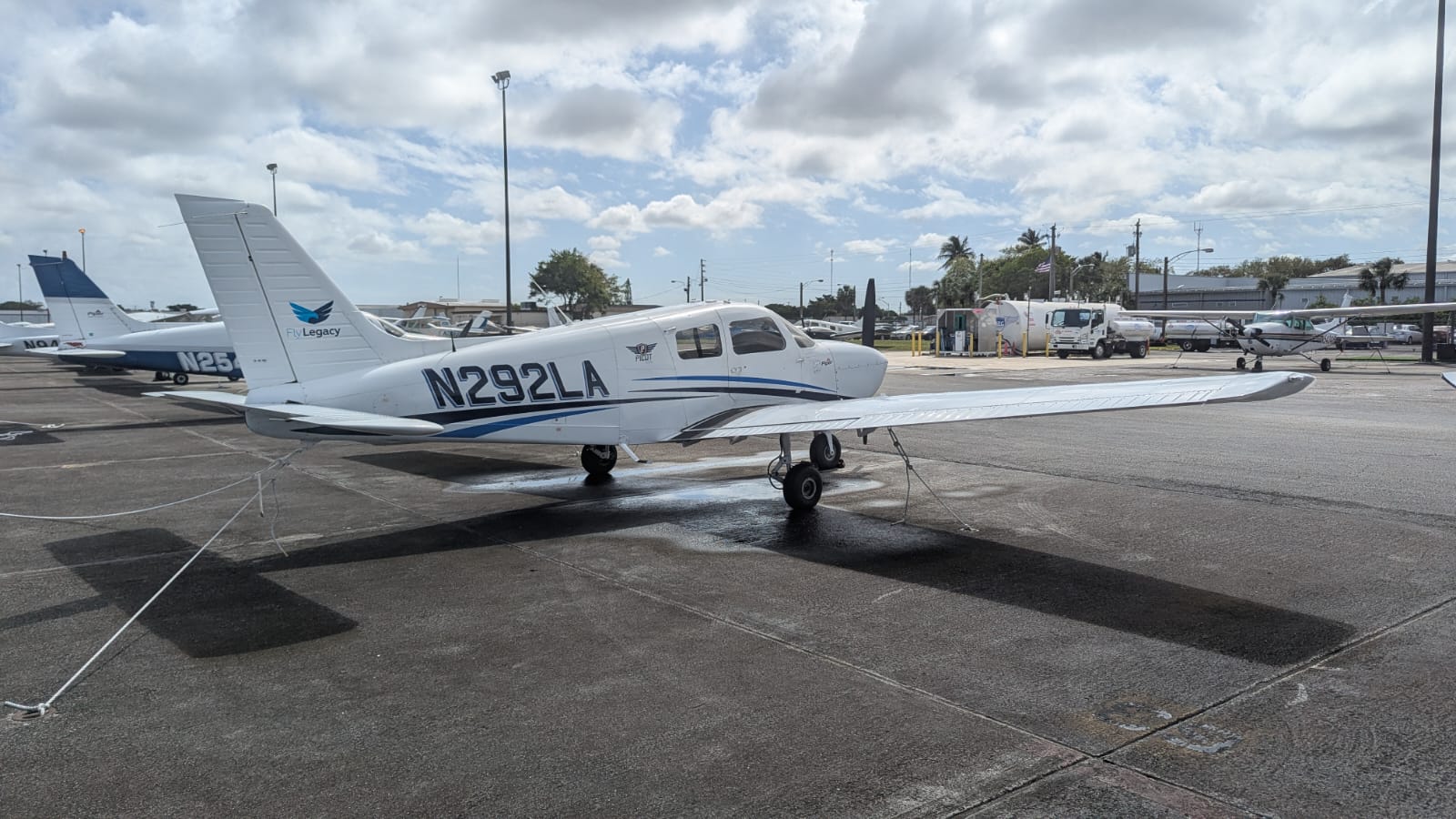
Flying a multi engine plane in Florida feels a little different than it does elsewhere. The skies are bright, and the weather’s usually friendly, but there’s more going on below the surface. For pilots still getting used to twins, some Florida airports can feel tighter, a little more crowded, or just harder to manage than expected. We’ve noticed it most in the areas around groups of flight schools in South Florida, including near Pompano Beach, where the mix of training traffic and complicated layouts makes it easy to feel boxed in. At Fly Legacy Aviation’s South Florida campus at North Perry Airport in Pembroke Pines, multi engine students train in the Diamond DA42 Twin Star and Piper Archer aircraft, so they see how these factors play out in capable, IFR-equipped twins.
That tightness isn’t just about parking spots or short taxiways. It shows up in faster changing patterns, hot weather that slows your climb, and having more decisions packed into shorter distances. If you’re flying a multi engine aircraft and trying to keep your checklist flowing without missing a beat, those smaller details can stack up fast.
Flying Two Engines in Florida’s Flat Terrain
Florida’s wide, flat terrain gives you great visibility. You can often see the airport from far away, and the horizon feels open. But that same open view can give a false sense of space when flying a bigger plane that needs more room to turn and land.
What throws some pilots off isn’t what they see, it’s what they don’t expect once they enter the pattern. Many small and mid-sized airports in South Florida have shorter patterns and quicker turns, which are fine for light singles but feel rushed when flying a twin.
Here’s what can catch you off guard:
- Some airports are surrounded by controlled airspace, while others aren’t, changing how you approach them
- The switch from towered to non-towered fields, sometimes only a few miles apart, shifts the rules more often than in other parts of the country
- Taxi layouts and short run-up areas can leave little room to prep without blocking others or being rushed
When you’re operating a heavier aircraft that needs more time and focus to manage gear, props, and flap settings, these shorter layouts make everything feel tighter even before wheels leave the ground.
What Warmer Weather Means for Multi Engine Landings
By early summer in South Florida, temperatures climb fast. That heat affects your aircraft in ways you can’t ignore, especially in a multi engine plane where adjustments matter more.
Engines may run hotter, and climb performance drops faster as the air thins with rising temps. You’ll likely use longer throttle pushes, adjust mixture more carefully, and give yourself more runway than you might somewhere cooler.
Sunny, humid days can stir up thermal bumps too. That creates waviness in the air, especially on final descent, when everything else should stay steady. Even a small shift in airflow can mess with your timing or throw off gear sequencing.
Here’s how we usually handle it:
- Be more patient before final, you may need more time or distance to settle the aircraft
- Light haze can build quickly in the afternoon, softening your runway view earlier than expected
- The longer daylight means more flying time, which is great, but fatigue builds up easier in twins due to the higher workload
The added heat doesn’t just test your stamina. It makes every setting count, especially during landings where approach speeds and descent planning take more discipline.
How Busy Traffic Patterns Add Pressure
The area near Pompano Beach has always drawn a mix of student pilots, seasoned aviators, and visitors doing practice runs. If you’re flying a multi engine aircraft, you’ll quickly spot how traffic builds differently compared to less populated zones.
Unlike quieter fields, patterns here are full of radio calls, last minute switches, and unexpected go-arounds. If you’re the only multi engine aircraft in the mix, it can feel like everyone else is making shorter turns or flying at different speeds. That difference adds pressure.
There’s also a wide range of pilot experience across different aircraft types. Some are working on first solos, while others are refining their commercial skills. That mix makes pattern spacing tricky for twins, which take longer to slow down or need more distance to gear down smoothly.
A few things we keep in mind when flying these patterns:
- Stagger your base and final turns slightly if other traffic is too tight
- Don’t rush your settings just to “fit in” with smaller planes, fly your aircraft first
- Watch closely for pattern drift or altitude changes, especially on hazy days
Your timing can make or break a clean multi engine landing here. It’s not a place to push through or take shortcuts.
Why Knowing the Local Airspace Helps
Becoming familiar with the airspace around South Florida helps everything fall into place faster. Whether you’re coming into a small controlled field or entering a busy corridor, knowing the common approach routes matters, a lot more than just punching in waypoints.
In South Florida, many airports sit under or beside larger controlled zones. Knowing when those switch frequencies or require clearances saves time and stress, especially when flying a twin that uses more power just to hold pattern altitude. At Fly Legacy Aviation, the accelerated multi engine rating course in South Florida combines 10 hours of multi engine flight instruction with 10 hours of ground training over about six days, keeping you immersed in local procedures around airports such as Pompano Beach Airpark and North Perry Airport.
Frequencies can get crowded in the summer, with multiple instructors and students either practicing maneuvers or preparing to land. Listening ahead can clue you into traffic flow so you know when to start early prep instead of doing it on final.
Some flight schools in South Florida make learning these habits part of regular training from day one. That kind of early exposure builds confidence and rhythm, particularly for multi engine pilots who need consistency to handle the heavier controls and twin engine checklist calmly in busy air.
Smooth Landings Start with the Right Habits
Flying in Florida teaches you to stay flexible. Days start clear, then cloud over, then go clear again. Traffic stacks up, then suddenly clears. You learn quickly how to stay calm in shifts and respond without losing your focus.
Twin engine aircraft leave less room for error. Every task feels more layered, props move, gear cycles, and mixtures shift just as radios get busier. The more you fly in tighter spaces, the better prepared you are when things don’t go perfectly.
The best way to feel more at ease in these tighter airports is to fly with structure. Build your flows; repeat them often. When the aircraft starts doing what you expect, landing it in a small or busy airport stops feeling like a challenge and starts becoming routine. And once it does, you won’t worry so much about the tighter spaces that once seemed overwhelming.
At Fly Legacy Aviation, we understand the importance of training in environments that reflect real-world flying conditions. Our Florida-based programs are designed around locations like Pompano Beach, where heat, air traffic, and challenging patterns help you develop the focus and confidence needed for multi engine operations in busy airspace. See how our flight schools in South Florida can support your aviation training. Reach out when you’re ready to take the next step, we’re here to help you prepare for every flight ahead.
